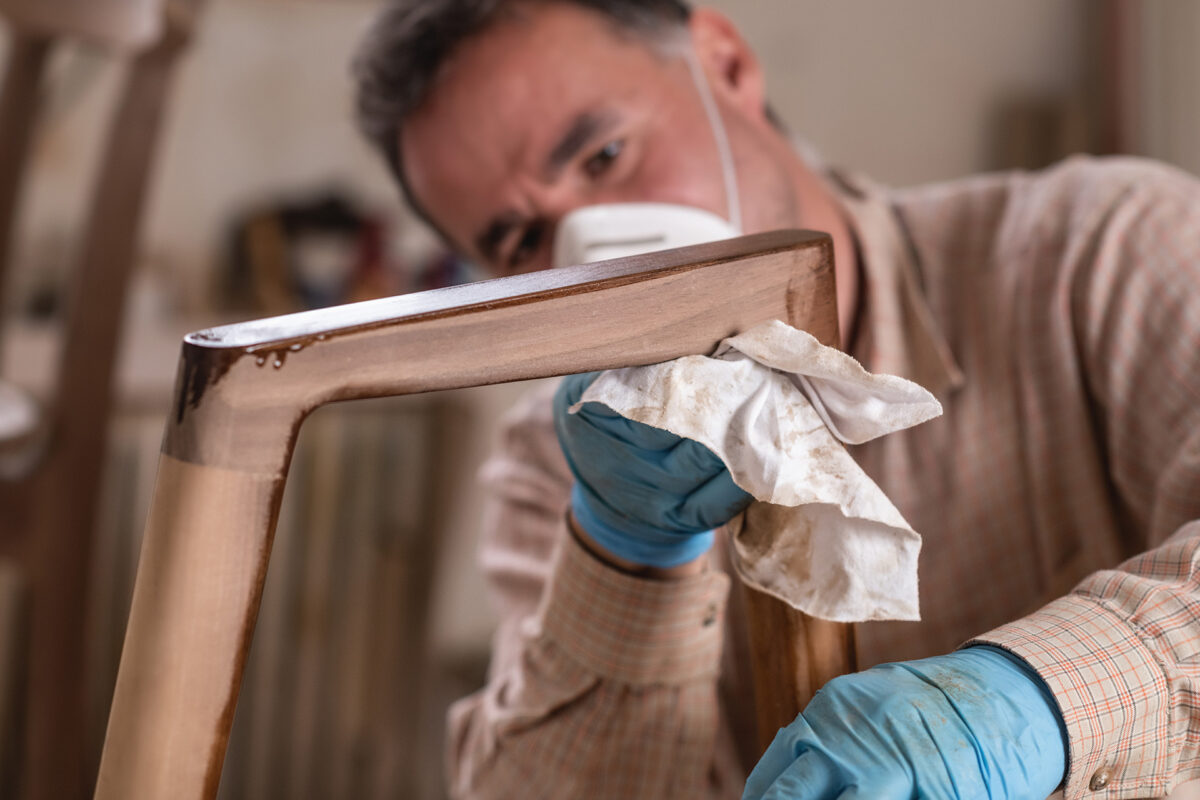
Walk into any hardware store or supermarket and you will find an entire aisle dedicated to furniture polish. Sprays, wipes, oils, creams, most of them promise to restore your timber furniture’s lustre and protect the finish. Some of them smell absolutely incredible. And some of them are quietly doing serious, long-term damage to your finest pieces.
This is not a lecture against ever touching your furniture with a cloth. It is a practical guide to understanding what is actually on your timber surfaces, what those supermarket products are really doing, and why the occasional professional polish from a skilled craftsperson is one of the best investments you can make for furniture you genuinely care about.
Brisbane Upholstery has been working on quality timber furniture from our Northgate studio for decades, and there is not a week that goes by when we do not encounter a beautiful piece that has been compromised by well-intentioned but damaging DIY treatment.
Before you reach for any product, it helps to understand what kind of finish your timber furniture actually has. This is not always obvious, and it matters enormously. There are four main finish types you are likely to encounter in Australian homes.
Older pieces, particularly antiques and quality furniture from the early to mid 20th century, are often finished with beeswax, carnauba wax, or a wax blend. These finishes are beautiful, warm, and relatively easy to maintain, but they are also vulnerable to certain chemicals and require specific products to stay in good condition.
A hallmark of high-end furniture making, French polish is a shellac-based finish applied by hand with a pad in dozens of thin coats. It produces an extraordinarily deep, glass-like surface that showcases timber grain magnificently. It is also one of the finishes most easily damaged by incorrect products, particularly those containing alcohol or silicone.
Modern timber furniture is more likely to have a lacquer or polyurethane topcoat, a harder and more durable finish that is resistant to everyday wear. These are generally more forgiving of cleaning products, but they have their own vulnerabilities and still require appropriate care.
Tung oil, Danish oil, and linseed oil are popular on hardwood furniture and kitchen benches. These penetrating finishes soak into the timber rather than sitting on top of it. They need periodic re-oiling, but with the right product for that specific timber and oil combination.
Before you use any product on a piece you care about, always test it on a hidden section first, such as the underside of a shelf or the inside of a drawer. What works beautifully on one finish can cause irreversible damage to another.
If there is one thing we would want every Brisbane homeowner to take away from this post, it is this: check your furniture polish for silicone.
Silicone is extraordinarily common in supermarket furniture polishes because it gives immediate, impressive results. It creates a slick, shiny surface that looks great right out of the can. The problem is that silicone does not nourish the timber or the finish. It simply coats it. Over time, it builds up into a thick, greasy layer that attracts dust and eventually creates a cloudy, plastic-looking residue.
Worse, silicone penetrates deeply into the grain of the timber and is notoriously difficult to remove. When a professional polisher attempts to refinish or restore a piece that has been treated with silicone products, they face the challenge of silicone contamination. It interferes with the adhesion of new finishes, causes fish-eye defects in fresh lacquer or shellac, and can mean significantly more work and cost to achieve a clean result.
Read the label on your current polish. If you see dimethicone, silicone oil, cyclopentasiloxane, or polydimethylsiloxane, you are dealing with a silicone-based product. It may look good today, but it is making future restoration harder and more expensive.
One of the most common misconceptions about professional furniture polishing is that it always means stripping back to bare timber. In reality, a skilled polisher’s primary goal is to preserve as much of the existing, original finish as possible, particularly on antique pieces where the original patina represents decades of character.
The process of assessment begins with identifying the finish type and understanding its condition. A finish that looks dull or cloudy may simply need a careful clean and feed to remove built-up grime and restore its natural lustre. A surface with minor scratches might respond beautifully to a light abrasive cut and recoat, rather than requiring a full strip.
This is the work that separates a skilled polisher from a can of spray. The ability to look at a piece, read its surface, and understand exactly how much intervention it needs is the product of years of experience. At Brisbane Upholstery, our approach is always to do the minimum necessary to achieve the best result.
A full strip, sand, and repolish is sometimes absolutely the right answer, particularly for pieces in poor condition or those that have been badly treated with the wrong products. But it is not always necessary, and an experienced eye can save your timber’s original character in ways that a DIY approach simply cannot replicate.
Regular, appropriate care between professional services keeps your pieces looking their best and extends the time between more intensive work. Here is what we recommend for each stage of your routine.
Use a soft, dry, lint-free cloth or a quality microfibre cloth. Avoid feather dusters, which can scratch fine finishes, and avoid any cloth that has been washed with fabric softener, as these leave residues. For carved or detailed areas, a soft-bristled brush works beautifully. A clean shaving brush is ideal.
For spills on most finishes, act quickly with a slightly damp cloth followed immediately by a dry one. Avoid letting water sit on timber, particularly French polished or wax-finished pieces. For sticky residues, a very small amount of plain warm water is usually sufficient. Avoid using vinegar or lemon juice on timber finishes. Despite what you might read online, the acidity can dull and etch certain shellac and lacquer surfaces.
If you have a piece with a genuine wax finish, a small amount of good-quality beeswax paste applied sparingly with a soft cloth and then buffed off is the appropriate maintenance product. Avoid sprays. A thin coat well buffed will always outperform a heavy coat left to haze.
UV damage is one of the most significant risks to fine timber finishes in Brisbane homes. Wherever possible, position your best pieces away from direct afternoon sun, or use UV-filtering window film. Even indirect sunlight through west-facing glass can cause significant bleaching and surface cracking in finishes over time.
There are clear signs that your timber furniture needs professional attention rather than a home touch-up. If you spot any of these, it is worth getting in touch sooner rather than later, as some conditions are easier and less costly to address before they progress.
If your dining table, sideboard, or timber chairs are showing any of these signs, we would love to take a look. Bring a photo into our Northgate studio or give us a call. Our team can often give you a reliable assessment of what is involved just from a good set of photos, and we will always give you an honest view of the options rather than recommending more work than a piece needs.