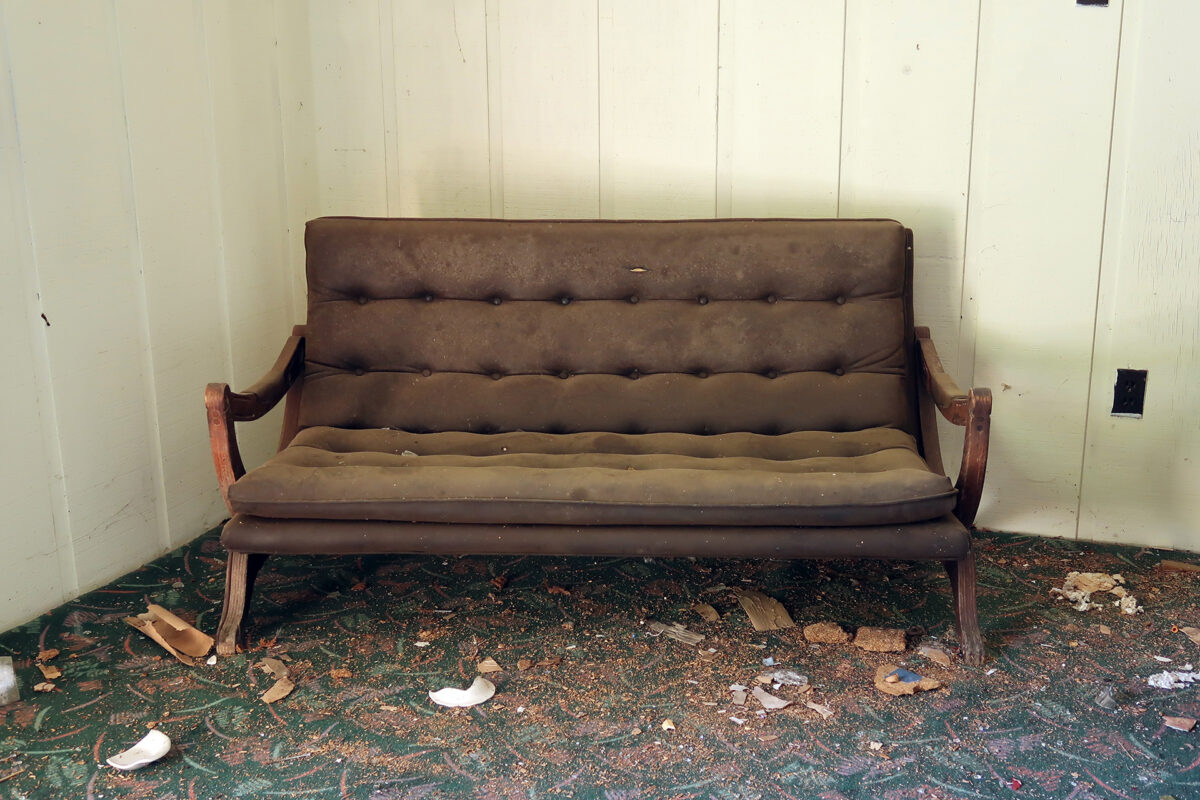
Cast your eye around your living room for a moment. That battered three-seater you have been meaning to replace, the one your nan swore was built to last, might just be worth a lot more than you think. In a world drowning in flat-pack furniture and factory-floor sofas shipped in from overseas, Brisbane Upholstery has spent over 80 years of combined experience watching homeowners throw away genuine gems while buying cheap replacements that fall apart within a few seasons.
This guide is your definitive forever furniture audit. We will walk you through exactly how to assess whether your sofa, armchair, or dining suite is worth investing in, or whether it is genuinely time to move on.
Australia has quietly developed a fast furniture habit. Big-box retailers and online marketplaces have made it easier than ever to buy a new sofa for $800, and easier still to throw it away three years later when the cushions sag and the legs wobble. What most people do not realise is that this cycle costs them far more in the long run, and it generates an enormous amount of landfill waste in the process.
The alternative is a piece of furniture that becomes part of your family. Something you maintain, refresh when needed, and pass on. The first step is knowing whether what you already own is worth keeping.
There are three quick checks that will tell you more about a piece of furniture than any label or price tag. Work through them in order before you make any decision about restoration or replacement.
The single fastest way to assess furniture quality is to try lifting one end of it. A sofa with a solid hardwood or kiln-dried timber frame is significantly heavier than one built on particle board, MDF, or cheap pine. If you can lift your three-seater with one hand, that is a warning sign.
Quality Australian domestic furniture from the mid-20th century was almost universally built on solid timber frames, often hardwoods like spotted gum, blackbutt, or imported oak. These frames can last a century or more with the right care. Particle board, by contrast, is susceptible to humidity, swells when damp, and loses structural integrity when disassembled and reassembled.
Flip a chair upside down or lean in and examine the corner blocks of your sofa. Quality pieces will have solid wood corner blocking, often glued and screwed or dowelled together. Mass-produced furniture frequently skips this step, relying instead on staples and lightweight metal brackets that work loose over time.
Run your hand along the base of the frame. You are looking for solid, continuous timber rather than hollow-sounding sections or visible laminate edges. A proper frame will feel dense and completely rigid.
Sit on the piece and pay attention to what you feel underneath you. Traditional eight-way hand-tied coil springs provide a distinctive, even support that feels fundamentally different from the zigzag or sinuous springs used in modern budget furniture. If your sofa has a deep, responsive bounce and returns cleanly to shape, there is a good chance the internal structure is sound.
We regularly see pieces come into our Northgate studio that are 50 or 60 years old with frames in near-perfect condition. A quality timber frame, properly maintained, genuinely does not wear out.
The maths is often more compelling than people expect, so it is worth laying it out plainly.
A well-made sofa from the 1970s or 1980s, fully reupholstered with quality fabric and new high-resilience foam, will typically cost between $1,500 and $3,500 depending on size, complexity, and fabric choice. That same investment in a brand-new sofa from a mid-range retailer gets you something that, in many cases, will need replacing within five to seven years.
Run the 20-year calculation. If you buy a $1,200 sofa and replace it every five years, you have spent $4,800 across four purchases, contributed four sofas to landfill, and still do not have anything of lasting quality. A $2,500 professional reupholstery on a quality timber-framed piece gives you a sofa that will comfortably see another two decades, can be re-covered again if your tastes change, and retains genuine structural integrity throughout.
The case for restoration becomes even stronger when you factor in antique or vintage pieces that carry genuine collector or sentimental value. These are items that simply cannot be replicated at any price point.
Queensland’s subtropical climate is particularly unforgiving to cheap furniture construction. The combination of high summer humidity and strong UV exposure creates a cycle of expansion, contraction, and moisture absorption that accelerates the failure of low-grade adhesives and synthetic foams.
The cheap polyurethane foams used in budget furniture off-gas and degrade more quickly in warmer climates, losing their resilience and developing that characteristic crumbling failure within a few years. Traditional upholstery techniques, by contrast, use layered materials including natural fibres, hessian, and higher-density foam that are significantly more stable across Brisbane’s temperature and humidity range.
Particle board frames are similarly vulnerable. Brisbane’s wet seasons introduce enough ambient moisture to cause swelling in MDF and particle board products, weakening joints and causing surface delamination. A solid timber frame that has been in your family for forty years has already proven it can handle the Queensland climate. A new particle board sofa has not.
Work through this checklist to help you make the call. The more boxes you tick in the first four, the stronger the case for restoration.
If your piece ticks the first three boxes, the chances are excellent that a professional restoration will be one of the smartest investments you make in your home.
At our Northgate studio, we specifically work on quality domestic and antique pieces. The kind of furniture that is actually worth the investment of skilled craftsmanship. We do not do cheap patch jobs, and we will not take on a piece if we do not believe the underlying structure justifies the work.
If you are not sure whether your sofa or armchair passes the test, bring in a photo or give us a call. Our team will give you an honest assessment with no obligation and no sales pressure. We would rather spend ten minutes helping you make the right decision than reupholster a piece that will not see out the next decade.